
Category: Geopolitics

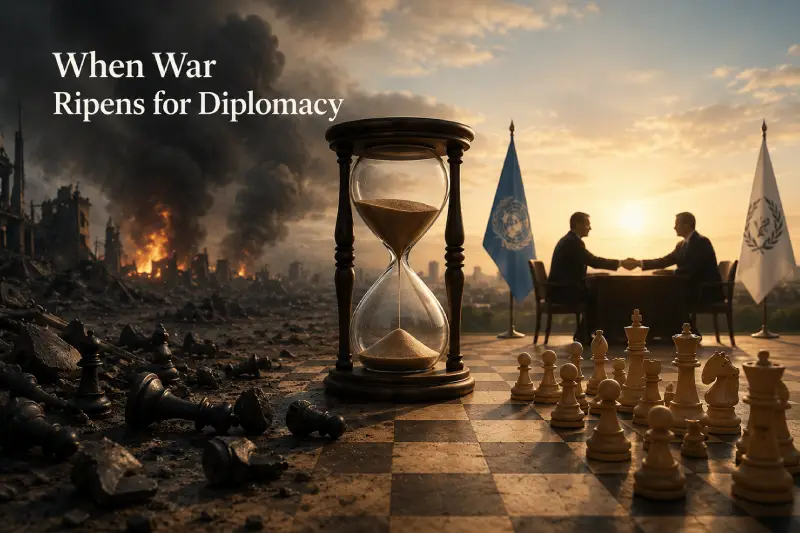
When War Ripens for Diplomacy
Geopolitics
silentsoldier2018@gmail.com

When War Ripens for Diplomacy

Trust isn’t a precondition to diplomacy; rather, diplomacy starts when one can no longer afford the alternatives. And that’s what makes the current U.S.-Iran negotiations through Pakistan so important. The ongoing negotiations and the temporary ceasefire between America and Iran, is  not solely  because these two enemies are close to finding peace in some sentimental way, or they share values between them, rather it is  because that  they may be at the point where the price of continued military action
Read More »
How US will enforce BLOCKADE and what impacts can it generate
Geopolitics
silentsoldier2018@gmail.com

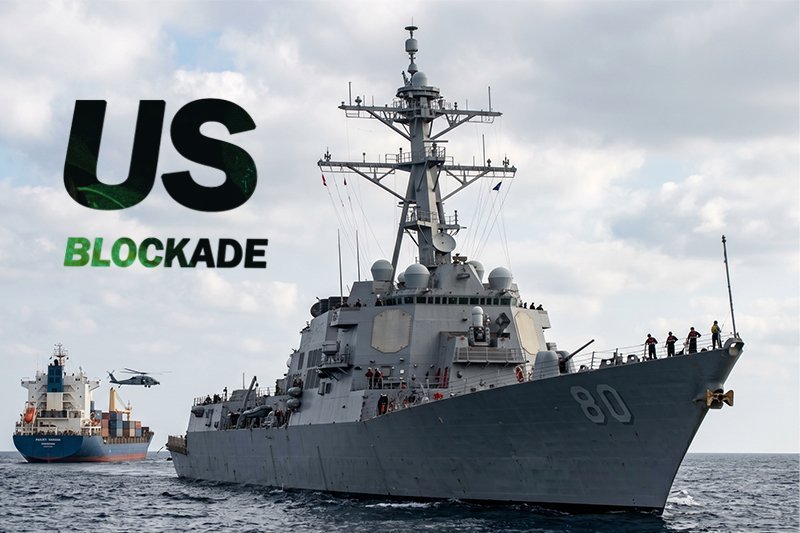
How US will enforce BLOCKADE and what impacts can it generate

The clash between Iran and US/ Israel that began on 28 Feb this year has spiraled into a bigger confrontation then as envisaged earlier. In the beginning of the strikes, US/ Israel were confident of the regime change to occur within a week or two; however, same could not materialize due their over optimistic calculations and vengeance of Iranian populace towards attack on their national identity. In the aftermath of the failure of first strategy, plan shifted to wiping out

Read More »
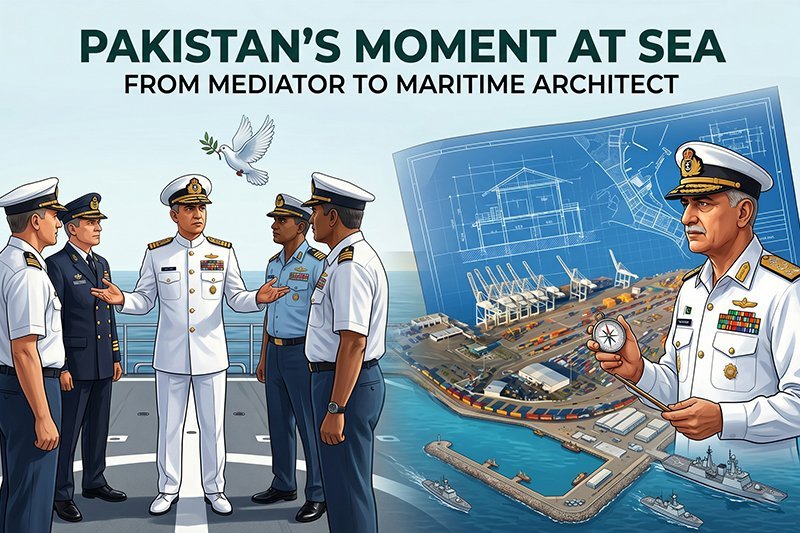
Pakistan’s Moment at Sea: From Mediator to Maritime Architect
Geopolitics
silentsoldier2018@gmail.com

Pakistan’s Moment at Sea: From Mediator to Maritime Architect

There are rare moments in international politics when a state does more than merely protect its interests; it helps prevent a wider catastrophe. Pakistan’s recent role in efforts to stop the war between United States and Iran appears to be one of those moments. By helping keep channels open between hostile parties, hosting talks in Islamabad and sustaining diplomatic contact even when negotiations faltered, Pakistan did not simply perform routine diplomacy. It acted as a stabilizer at a moment when

Read More »
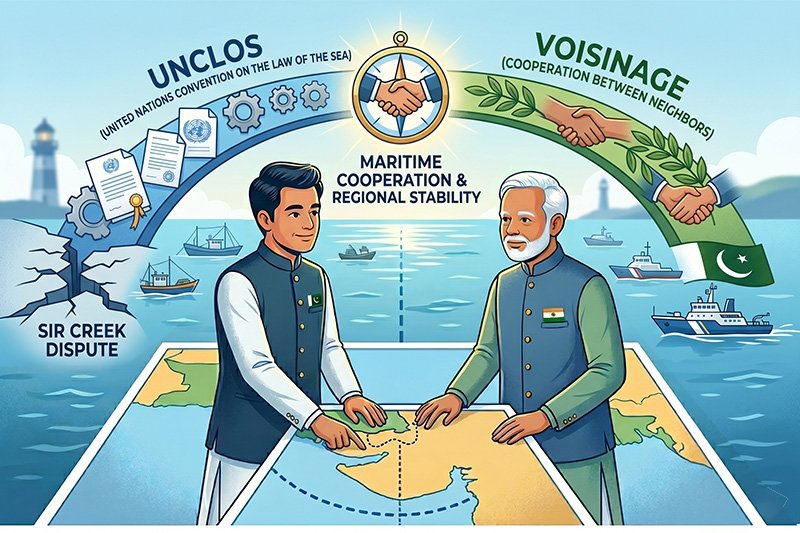
Beyond Sir Creek Dispute: UNCLOS and Voisinage as Pathways to India–Pakistan Maritime Cooperation
Geopolitics
silentsoldier2018@gmail.com

Beyond Sir Creek Dispute: UNCLOS and Voisinage as Pathways to India–Pakistan Maritime Cooperation

Abstract: This article proposes the “Sir Creek Dialogue: Fostering Voisinage and Cooperation,” an initiative, as a pragmatic pathway for India and Pakistan to manage the complex Sir Creek maritime boundary dispute. Grounded in the principle of voisinage (good neighborliness), this approach aims to move beyond entrenched geopolitical positions, build mutual confidence, and ensure a stable and prosperous future for communities reliant on this vital estuary. The famous Sir Creek, forms part of the boundary between Pakistan’s Sindh province and India’s Gujarat state.

Read More »
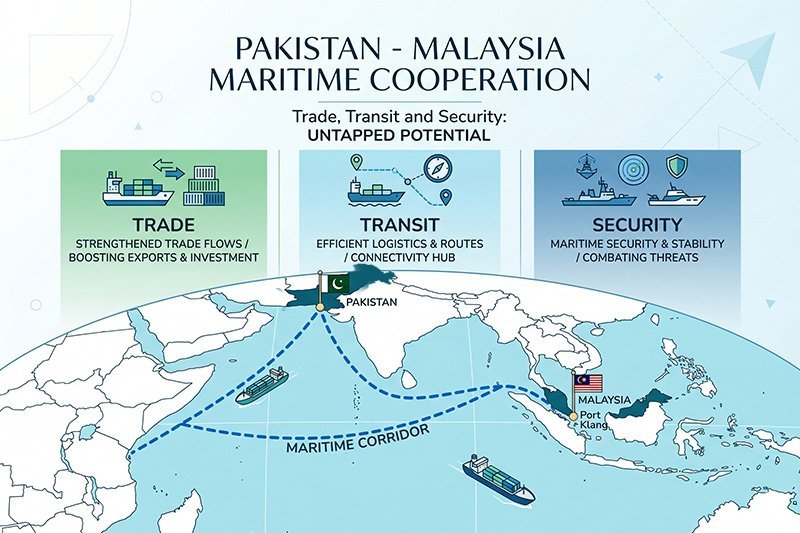
Trade, Transit and Security: The Untapped Potential of Pakistan Malaysia Maritime Cooperation
Geopolitics
silentsoldier2018@gmail.com

Trade, Transit and Security: The Untapped Potential of Pakistan Malaysia Maritime Cooperation

The focus of Pakistan’s strategic planning has historically remained land based, with it primarily focusing on security and economy. However, in the era of ever-increasing globalization, the importance of maritime cooperation can no longer be ignored. Southeast Asian states working together under the platform of ASEAN have emerged as global leaders of maritime cooperation and emerging economic hubs. Thus, Pakistan having limited cooperation with ASEAN states can be considered as a missed opportunity. Among the ASEAN states, Malaysia and Pakistan

Read More »
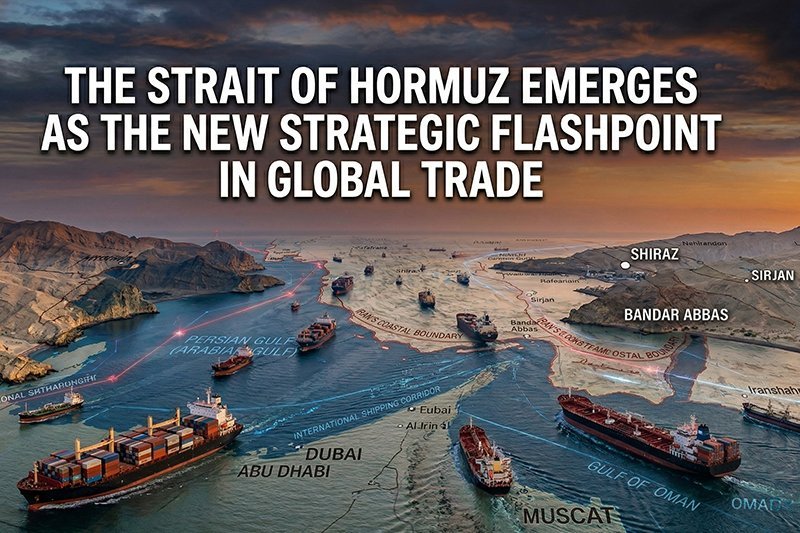
The Strait of Hormuz Emerges as the New Strategic Flashpoint in Global Trade
Geopolitics
silentsoldier2018@gmail.com

The Strait of Hormuz Emerges as the New Strategic Flashpoint in Global Trade

At the outset of the conflict, the Strait of Hormuz remained largely absent from global discourse. Yet as hostilities deepened, this narrow maritime corridor has rapidly evolved into one of the most consequential pressure points in international geopolitics, shaping energy markets, trade flows and strategic calculations among world powers. Before tensions escalated, an estimated 138 to 150 vessels passed through the strait daily. This traffic represented nearly one-fifth of the world’s oil supply, alongside vast volumes of commercial goods. Such

Read More »
Completing the Maritime Picture: Why Regional Information Hubs Matter in the Strait of Hormuz Crisis
Geopolitics
silentsoldier2018@gmail.com

Completing the Maritime Picture: Why Regional Information Hubs Matter in the Strait of Hormuz Crisis

The recent op-ed on “Strait of Hormuz: Time for a Maritime Peacekeeping Operation?” by Christian Bueger, published on 24 March 2026 offers a compelling and well-structured analysis of one of the most consequential disruptions to global maritime trade in recent history. Its central argument that military solutions alone are insufficient to restore confidence in commercial shipping is both timely and analytically grounded. By highlighting the limitations of naval escorts, the risks of escalation and the promise of diplomatic mechanisms, the piece

Read More »
West Asian War: Strategic Lessons for Pakistan
Geopolitics
silentsoldier2018@gmail.com

West Asian War: Strategic Lessons for Pakistan

The confrontation in West Asia involving Iran, Israel, and the United States has emerged as one of the most significant demonstrations of 21st-century warfare. Unlike traditional wars dominated by large-scale ground offensives and armoured formations, this conflict has unfolded across multiple domains—missiles, drones (particularly kamikaze or loitering or suicidal drone systems), airpower, cyber and satellite operations, electronic warfare (EW), and signal intelligence (SIGINT). For military strategists, it serves as a real-time laboratory illustrating, how future wars are likely to be

Read More »
Malaysia’s Maritime Strategy and Lessons for Pakistan in Combating Non-Traditional Maritime Threats
Geopolitics
silentsoldier2018@gmail.com

Malaysia’s Maritime Strategy and Lessons for Pakistan in Combating Non-Traditional Maritime Threats

The maritime domain, specifically Indian Ocean, has great importance in international relations, because of maritime connectivity, marine resources and trading routes through sea influence economic and security relationships among countries. Besides, non-traditional maritime security (NTMS) threats like piracy, illegal fishing, marine pollution and smuggling of contraband, human trafficking and maritime terrorism have recently become a serious concern for the coastal states. Malaysia is rimming Indian Ocean in the closer proximity of Malacca Strait and has its stakes involved in the

Read More »
Series of Foreign Policies Liberal Internationalism & U.S Foreign Policy
Geopolitics
silentsoldier2018@gmail.com

Series of Foreign Policies: Liberal Internationalism & U.S Foreign Policy

Liberal internationalism is defined as the practical manifestation of Liberal value system in the field of foreign affairs and foreign policy. Though it is rooted from Political Science’s theory of Liberalism, yet, it can be safely assumed that the concept of “Liberal Internationalism” is the outward extension and practical exhibition of the theory in the realm of International Relations, Foreign Policy, and how to build a Global Liberal Order. Since the beginning of the 20th Century, liberal Internationalism has been

Read More »